By Operon Editorial
March 26, 2026 - 8 min read
At a Glance
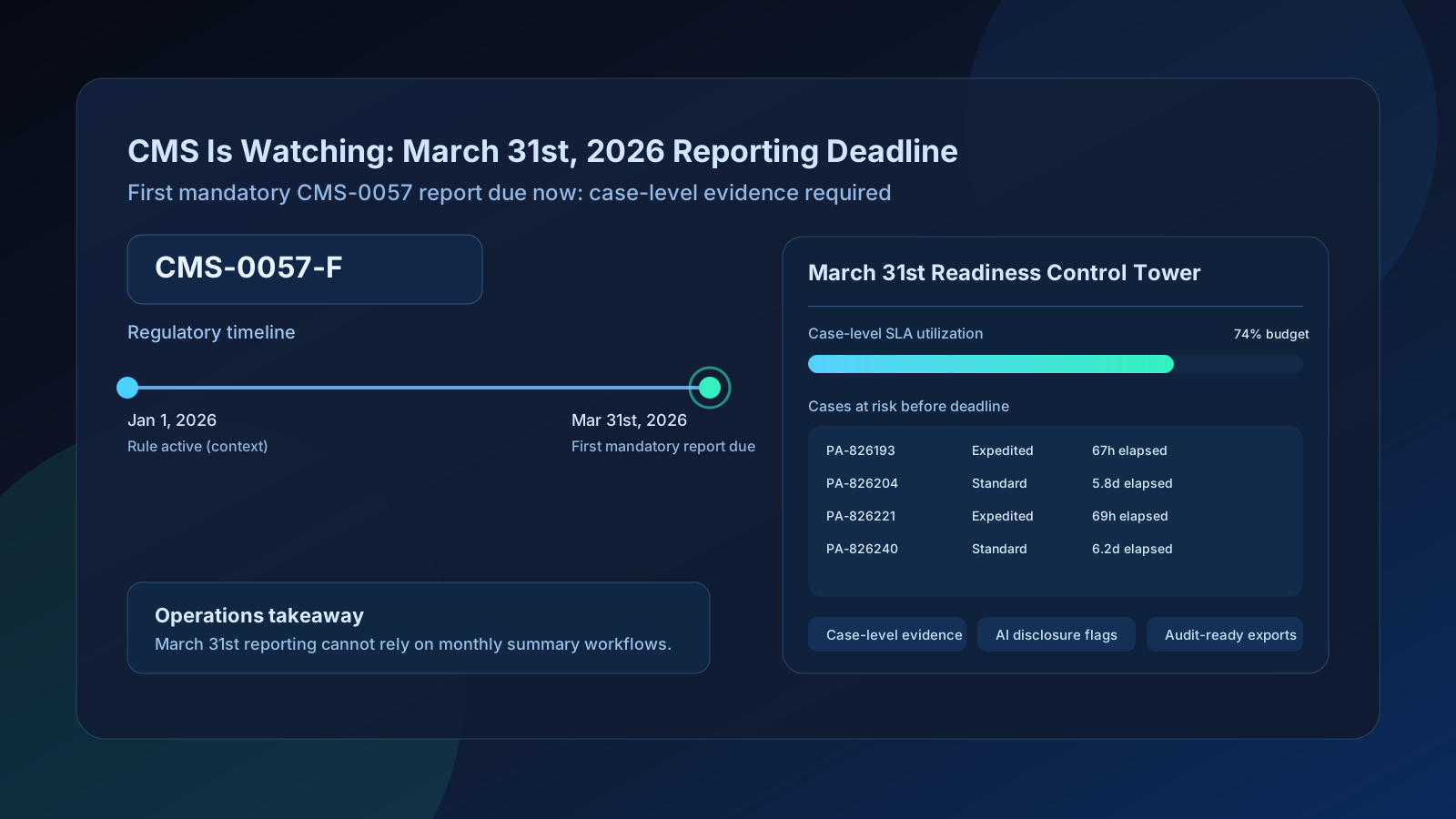
The most important date for operations leaders right now is March 31st, 2026 - the first mandatory CMS-0057 prior authorization metrics report. CMS-0057-F took effect on January 1, 2026, but March 31st is the first hard deadline where plans must produce case-level turnaround evidence, not monthly aggregates. The operational impact is immediate: teams need live visibility into SLA clocks, stage transitions, and ownership to submit defensible reporting. At the same time, multi-state plans are navigating additional PA reform rules and new AI disclosure obligations. This is no longer a policy watch item. It is an execution deadline that tests whether your PA operations are truly compliance-ready.
Why March 31st Is the First Real Test
Most leaders remember the headline numbers: 72 hours for expedited prior authorization decisions and 7 calendar days for standard decisions. The more important detail is how evidence must be produced by March 31st, 2026. CMS expects case-level traceability, including when each request was received, how it moved through the workflow, and when final determination occurred.
That requirement changes the work from periodic reporting to continuous instrumentation. Aggregate SLA percentages can hide failures. A plan can show high aggregate compliance while still carrying a set of materially late cases that create member impact and regulatory risk. Case-level visibility removes that blind spot by making each late case individually observable and explainable.
It also changes the burden on operations teams. If timestamps are inconsistent across intake, clinical review, and determination systems, reporting quality degrades immediately. If stage transitions are not captured cleanly, turnaround time logic becomes disputed. The technical requirement is straightforward, but the operational discipline is non-negotiable.
The State Patchwork Is Already Here
CMS sets a floor, not a ceiling. State PA reform activity has accelerated across the country, with differing definitions of urgent requests, different turnaround windows, and different reporting expectations. For plans operating across states, this creates parallel compliance obligations that cannot be managed with one broad monthly number.
Operationally, state rules require per-case policy context. Every case must be traceable by state, line of business, urgency classification, and determination type. Without this segmentation, teams are forced into manual reconciliation cycles whenever reporting is due or whenever an internal audit is triggered.
The teams that handle this well treat state variability as a data modeling problem, not a spreadsheet problem. They maintain rule sets that can be updated as laws evolve and apply those rules directly against live case timelines. This turns policy change into configuration work instead of emergency analyst work.
AI Disclosure Rules Raise the Bar Further
New transparency requirements in states including Texas and California add another layer: plans may need to disclose when AI contributed to adverse PA determinations. This requires case-level handler attribution, including whether AI, human, or hybrid processing influenced an outcome.
Many organizations have deployed AI in triage or documentation review, but they did not build persistent attribution into workflow records. That gap becomes visible under disclosure obligations. If you cannot identify which cases were AI-assisted, you cannot reliably comply with disclosure requirements or defend operational decisions.
This is also where compliance and ROI measurement converge. The same handler tagging needed for disclosure is the foundation for measuring AI impact on cost, cycle time, and rework. Plans that invest in this instrumentation get both regulatory readiness and stronger budget conversations.
Where Operations Teams Still Fall Short
In many plans, SLA monitoring remains retrospective. Supervisors review weekly or monthly extracts and discover breaches long after member impact has occurred. Rework loops remain partially invisible, especially when cases re-enter stages across system boundaries. Ownership gaps form when transitions between teams or vendors are not explicitly assigned.
The result is predictable: when reporting deadlines or audit requests arrive, teams run a two to three week scramble to pull, reconcile, and defend data. This approach is expensive, fragile, and increasingly out of step with regulator expectations for timely, self-explanatory documentation.
Most of these failures are not caused by a lack of effort. They are caused by operating with outcome-focused reporting on top of workflows that require process-level telemetry. You can know final determination counts and still miss where the cycle is slowing, who owns the queue, or which stage creates breach risk.
What Compliance-Ready PA Operations Look Like
Compliance-ready operations run with live SLA clocks per case, clear stage transition history, and explicit ownership at every handoff. Risk teams can identify cases trending toward breach before they breach and prioritize intervention based on probability and impact. Rework is measured and costed, not treated as background noise.
Reporting becomes a queryable capability instead of a quarterly event. When leadership asks for turnaround performance by state, urgency, vendor, or workflow stage, the answer comes from operational data that already reflects how work is actually moving today.
The strategic shift is simple: stop treating compliance as a reporting deliverable and treat it as an operating system property. That approach scales with new rules, supports faster audits, and protects both members and margins.
About Operon.Cloud
Operon.Cloud helps health plans build a case-level operational visibility layer across prior authorization, claims, and delegated workflows.
The platform connects workflow data from existing systems to expose SLA risk, rework drivers, ownership gaps, and AI involvement in real time, supporting both operational decisions and compliance readiness.
See how health plans are building PA compliance from case-level data: /solutions/prior-authorization